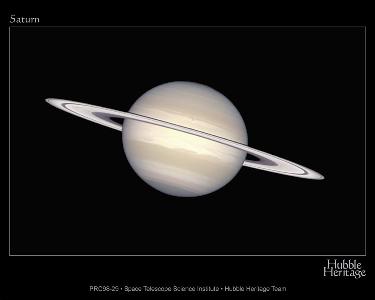
Astronomy 1010: Solar System Astronomy

Prof. Paul J. Wiita

Announcements

  • The assignment for Ch 11 was due on Friday, Nov. 20.
  • The assignment for Ch 12 will be available on Nov. 22nd and will be due on Dec. 3rd just after the last exam.
    But you should do it sooner as it will help you study for the exam.
  • There will be no assignment on Ch. 13, though you will be responsible for the part of it
    I cover in class on Dec. 1st for the exam on Dec. 3rd.
  • Practice questions for the Third Exam on Dec. 3rd were distributed in class on Thursday, Nov. 19th.
  • They are also available here.
  • They will be reviewed on class on December 1st.

    Textbook, Syllabus and Lab Information

  • The required textbook is The Cosmic Perspective by J. Bennett et al.
    The 5th edition is the official one for this course.
    Be certain to buy a book with access to the Mastering Astronomy website.
    If you took Astr 1020 first and used a 4th edition for that class you may continue to do so for this class as the differences between them are minor;
    however, you will probably need to get a new access kit for Mastering Astronomy.
  • All assignments are to be done using the Mastering Astronomy textbook companion website
  • Once on that site, click on Bennett et al.'s The Cosmic Perspective, 5e
  • Register using the code from the Student Access Kit that came with new books (or buy one to accompany used books).
  • Then enter this course ID: MAWIITA1010F09 and set up your
    personal ID in the format: YOURLASTNAME-YOURFIRSTNAME (i.e., with a hyphen but no spaces between them).
  • Check this site at least once a week to log in and answer assignments before each due date.
  • This site also has many useful tutorials and practice problems that may not be assigned but you may find very helpful in learning the material. You should explore the `Study Area' tab on the left of the MA web-page.

    In class you will be/were given an Astronomy 1010 Abbreviated Syllabus. It is also
    available here as a pdf file. (You need Adobe Acrobat to read pdf files. Get it here if you don't have it.)

  • But you must also carefully read the
  • Astronomy 1010 Fall 2009 Complete Syllabus as a pdf file. (This isn't being handed out so as to save paper.)

  • Also be sure to check out the: Astronomy Lab website and the
  • Astronomy Observing Session website

    Assignments

  • Logon to Mastering Astronomy (see above under Textbook, Syllabus and Lab Information or page 4 of the complete syllabus for required information)
    and do the Introduction to Mastering Astronomy assignment as soon as possible.
    This Intro assignment will not be graded, but will help you in doing your later assignments.
  • I will usually post assignment due dates on this web-site under announcements but you are responsible for checking the Mastering Astronomy site and completing all assignments by the due dates posted there.
  • Some people are having difficulty getting their answers to the questions on Mastering Astronomy entered properly.
    Be sure to click the Save (S button to the right and below the Next button) at the end of each of the Tutorials (e.g. Spectroscopy and Doppler Shift).
    This takes you to a screen where you can actually submit your answers to have them counted.
    There you must hit SUBMIT (not submit item) and doing so will take you to a screen where you need to confirm that you do want to submit your answers for grading.

    PowerPoint or PDF Summaries of Class Notes

    are typically made available on-line here after all or most of the material in that chapter has been covered in class.
    Most students are best served by taking written notes based upon material discussed in class.
    You should then compare those notes with the summary of notes files available here and/or with your textbook before the next class.

  • Introduction: The Scientific Method and Scales of the Universe
  • The Night Sky, complete
  • Ancient Astronomy & Geocentric Cosmology
  • The Copernican Revolution: the Heliocentric View
  • Motion, Energy and Gravity
  • Light: Wave and Particle Natures
  • Light: Spectra
  • Telescopes and Astronomical Instruments
  • Summary of Solar System Properties
  • Formation of the Solar System
  • Comparative Geology of Terrestrial Planets: Earth as a Planet
  • Earth as a Planet, finished
  • Geology: Moon & Mercury
  • Geology: Venus
  • Geology: Mars
  • Terrestrial Planet Atmospheres: General Properties & Earth's Structure
  • Terrestrial Planet Atmospheres: Individual Planets
  • Jupiter
  • Saturn, Uranus & Neptune
  • Jupiter's Moons
  • Moons of Saturn, Uranus & Neptune
  • Planetary Rings